
Hip FAQs
Answers to the questions we hear most often about hip replacement. Call 212-606-1065 (NYC) or 203-705-2113 (CT) with anything not covered
Deciding on Hip Replacement

-
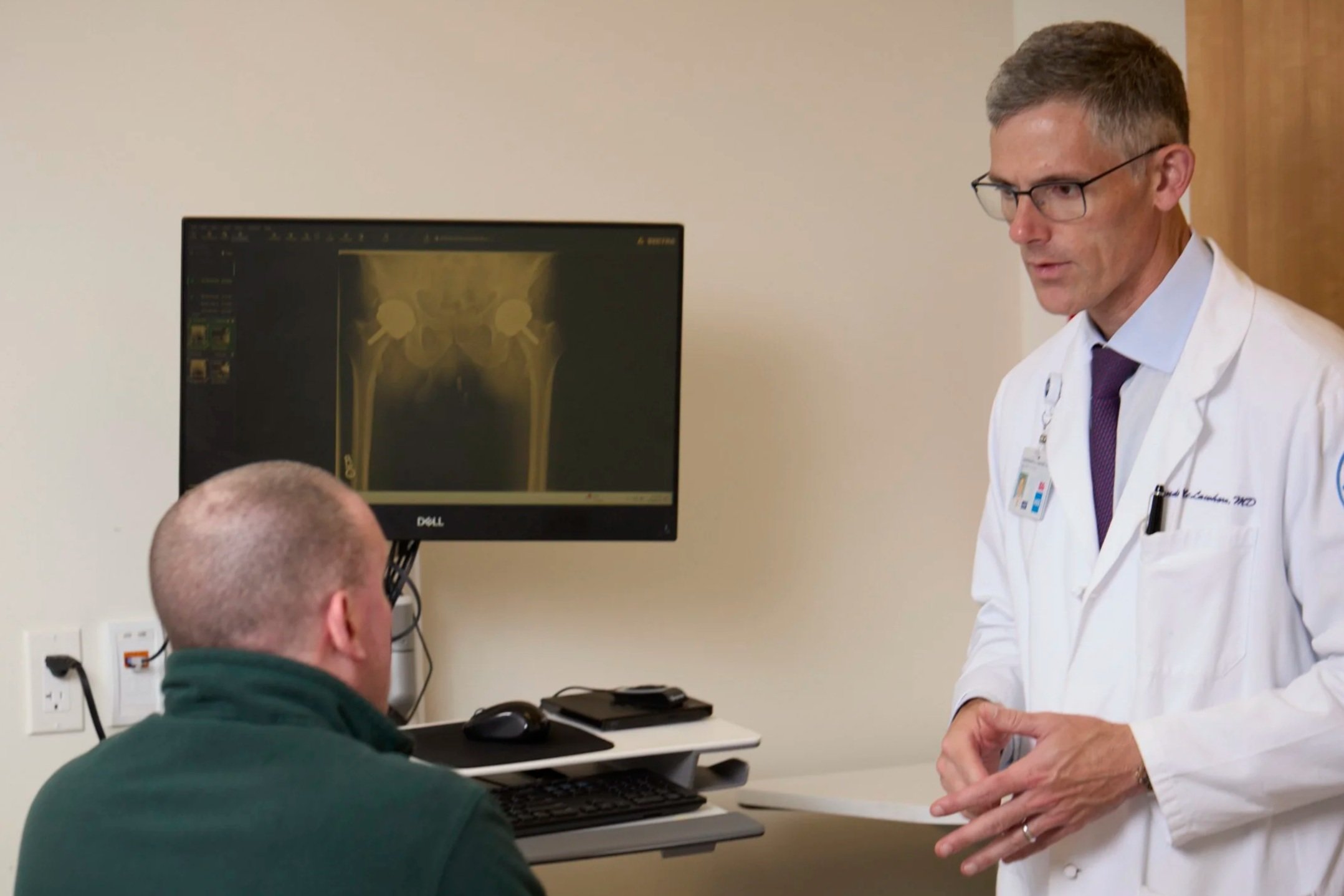
Hip replacement is generally considered when pain begins to interfere with your daily life, prevents you from participating in recreational activities, wakes you from sleep, and/or requires prescription pain medication. The decision is personal and collaborative — Dr. McLawhorn will review your imaging, assess your pain and function, and help you decide when the timing is right.
-
Chronic hip or groin pain interfering with daily activities; difficulty walking, standing, or climbing stairs; pain at rest or during sleep; stiffness limiting range of motion; and inadequate relief from medications, injections, or physical therapy. Severe arthritis confirmed by X-ray is typically a key indicator.
-
No established age limit. Most patients are 40–80, but younger or older individuals can be candidates based on overall health, pain level, and quality of life.
-
Dr. McLawhorn recommends a BMI of 40 or below for total hip replacement. If your BMI is above 35, anterior approach surgery may be offered less frequently. BMI above 45 requires consultation with a weight management specialist before surgery.
-
Yes. Prolonged delay can lead to worsening joint damage, muscle atrophy, decreased bone quality, and a more complex surgical procedure with a longer recovery.
Surgical Approach
-
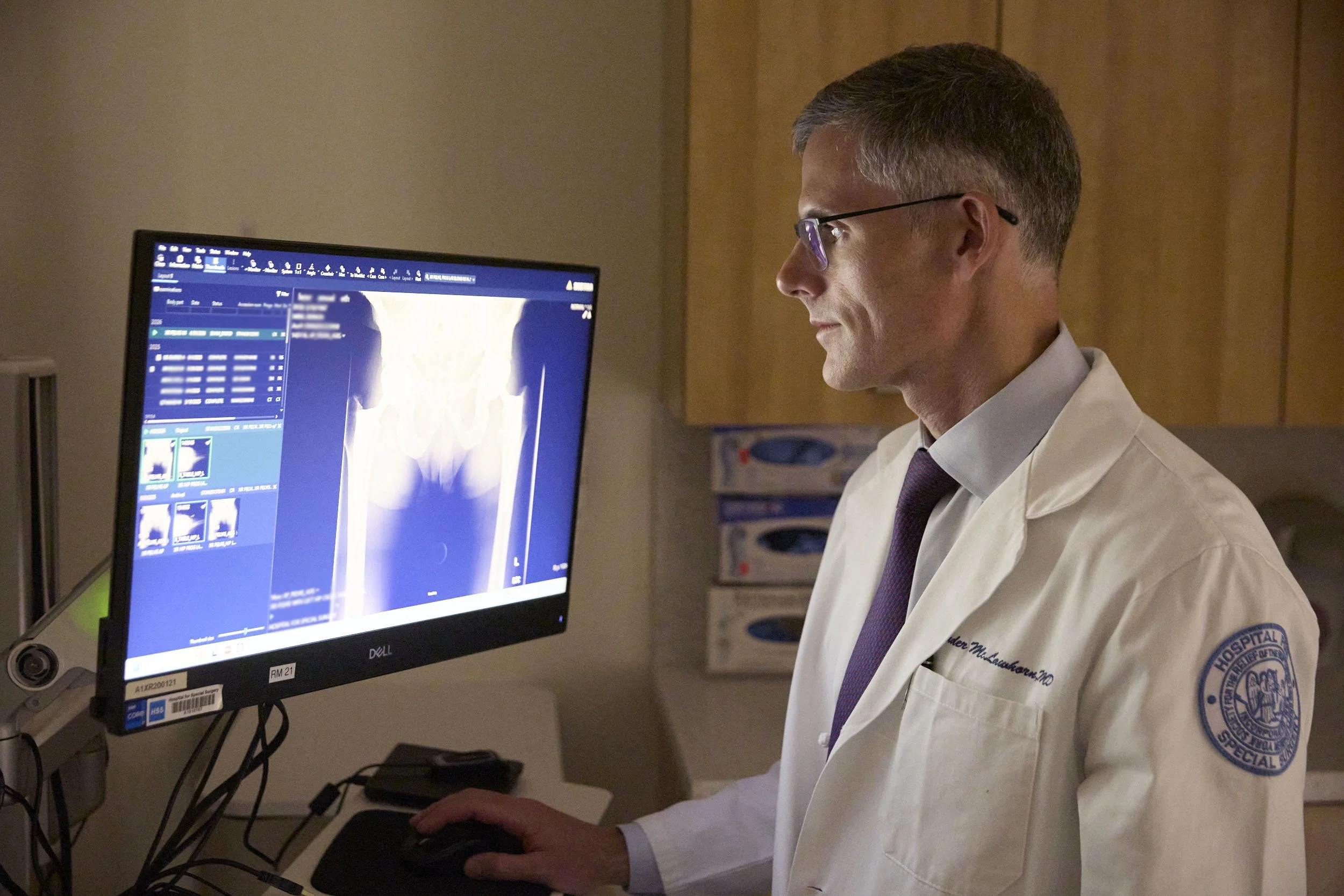
The direct anterior approach accesses the hip joint from the front through a natural gap between muscles — without cutting through them. This results in less postoperative pain, faster recovery, and a significantly lower dislocation risk. No hip precautions are required after surgery. Dr. McLawhorn believes most patients are candidates, even those who have been told otherwise.
-
Recovery after total hip replacement occurs in stages. Most patients are walking with a walker the day of surgery and using a cane within a week. Many patients resume normal daily activities within 4–6 weeks. The majority of pain relief and functional improvement occurs during the first three months after surgery.
A useful rule of thumb is that many patients achieve approximately 90% of their overall improvement by three months. However, recovery does not stop there. Strength, endurance, flexibility, balance, and confidence continue to improve over the following months, with most patients reaching their maximum recovery between 6 and 12 months after surgery.
Every patient's recovery is unique and depends on factors such as age, overall health, preoperative function, and activity goals.
-
Yes, for appropriate candidates. The bikini hip replacement places the incision along the natural skin fold of the groin, resulting in a more discreet, cosmetically appealing scar. Surgery and outcomes are identical to a standard anterior approach.
-
Many patients are surprised to learn they are candidates after consulting Dr. McLawhorn. He regularly sees patients for second opinions who have been told anterior approach is not possible. The only absolute exceptions are patients with excessive soft tissue at the incision site or highly complex anatomy.
Surgery & Hospital Stay

-
Most primary total hip replacements take approximately 2 hours, including anesthesia and positioning.
-
Most patients arrive approximately 2–3 hours before surgery for preoperative preparation and anesthesia evaluation. The surgical procedure requires 2 hours in the operating room. After surgery, patients spend 2–4 hours in the recovery area, where pain is controlled, physical therapy is initiated, and discharge criteria are met. Most patients return home the same day, spending a total of approximately 6–9 hours at the hospital from arrival to discharge.
-
Anterior approach patients do not require formal hip precautions. Posterior approach patients follow precautions for 6 weeks — avoiding deep hip flexion, crossing the operated leg, and internal rotation.
Recovery

-
Return to work: 2 weeks (sedentary) or up to 3 months (physically demanding). Low-impact activities at 6 weeks. Most sports at 3–6 months. Full recovery including resolution of all swelling can take up to 12 months.
-
Walking is the most important therapy after hip replacement. While a brief period of in-home therapy is permitted, Dr. McLawhorn generally advises against formal outpatient PT for the first 6 weeks. If specific deficits are present at the 6-week evaluation, a referral for formal therapy will be made at that time.
-
The lifelong risk of revision surgery after contemporary total hip replacement is less than 5%.
-
Most patients can drive 2–4 weeks after surgery, once off narcotics, sitting comfortably, and with good control of the surgical leg & normal brake reaction time.
-
Most patients have no specific activity restrictions six months after hip replacement and are encouraged to return to the activities they enjoy. Walking, cycling, swimming, golf, tennis, pickleball, hiking, strength training, and many other recreational activities are commonly resumed. While participation in higher-impact activities such as running and basketball is not prohibited, patients should understand that repetitive impact loading may increase implant wear over time and could affect the longevity of the bearing surface.
-
6 weeks, 1 year, 5 years, then every 5 years — with clinical examination and X-rays at each visit.