
NYC & Stamford, CT

Total Knee Replacement
When knee pain no longer responds to conservative treatment and begins to interfere with your daily life, total knee replacement can be a transformative solution — one of the most commonly performed and consistently successful surgeries in orthopedics.
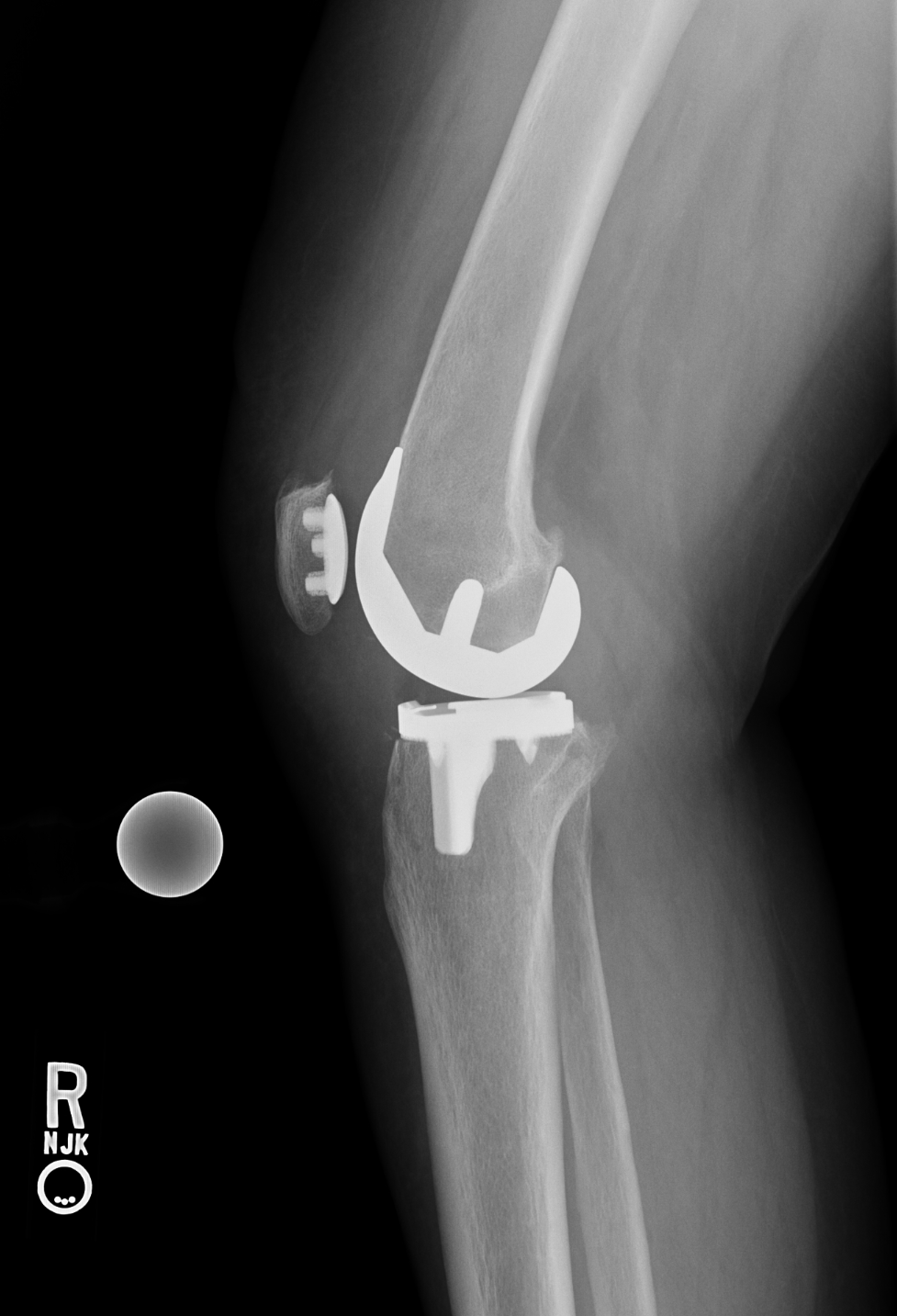
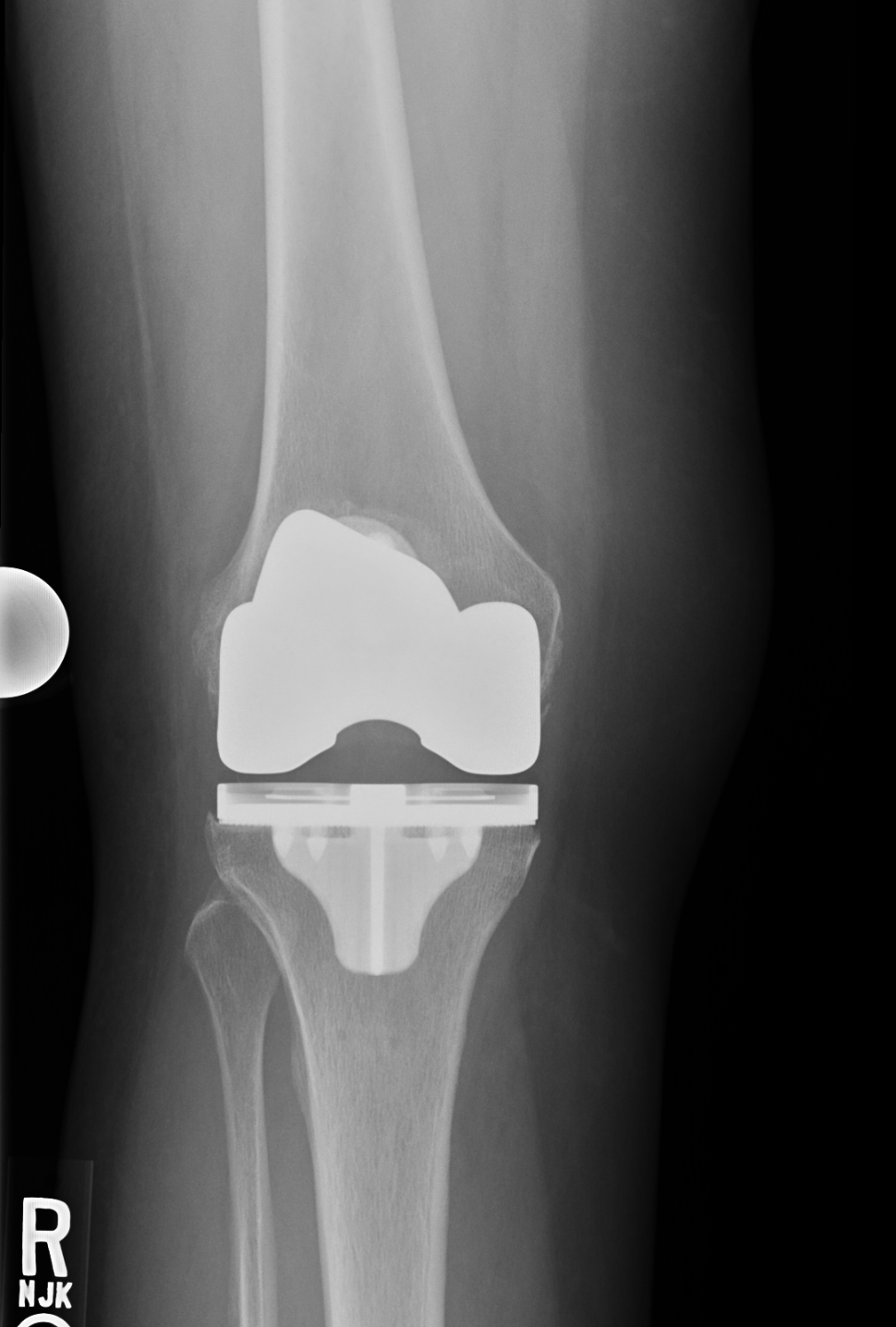
Total knee replacement (TKR), also known as total knee arthroplasty, is a surgical reconstruction of the knee joint using prosthetic implants made of special metals, plastic, and/or ceramic-coated metal.
The damaged cartilage and bone are removed, the ends of the bones comprising the knee are resurfaced, and a plastic insert is placed between the metal components for long-lasting, low-friction motion. Think of it as a resurfacing procedure — not a removal, but a replacement of the worn surfaces.
When Is It Recommended?
Dr. McLawhorn recommends considering total knee replacement when all four of the following criteria are met:
Severe bone-on-bone arthritis confirmed by X-ray (not MRI), affecting the joint space between the femur and tibia
Severe pain, stiffness, and dysfunction measured by validated knee questionnaires (such as the KOOS Jr.)
Failure of non-surgical treatments — especially weight loss, physical therapy, and anti-inflammatories
Knee pain that severely impairs walking and everyday activities
Regional anesthesia (spinal or epidural) with IV sedation
One or more nerve blocks to reduce postoperative pain
Antibiotics prior to surgery to prevent infection
Incision at the front of the knee, typically 5–7 inches
A subvastus approach can be used for most patients to access the joint without cutting any tendons or muscles
Removal of damaged cartilage, bone, and the menisci; while the ACL is removed, the PCL is typically preserved along with the other ligaments and tendons around the knee
Resurfacing of the femur and tibia with metal components
Insertion of a cross-linked polyethylene liner and a plastic button on the back of the kneecap
What the Surgery Involves
Recovery
Walk the same day as surgery — most patients go home the same day
Return to work: Within 2 weeks (sedentary jobs)
Stairs: Within first few days with assistance; independently within a few weeks
Driving: 2–4 weeks for left knee; 4–6 weeks for right knee
Full recovery: Most of the recovery occurs in the first 6 months, but it takes
at least 12 months to enjoy the full benefit of the new knee
Follow-up schedule: 6 weeks, 1 year, 5 years, then every 5 years
Setting Realistic Expectations
Total knee replacement does not restore a fully 'normal' knee. Most patients experience significant pain relief, but may notice mild clicking, some numbness on the outer side of the knee, or a band-like sensation across the front. Running and high-impact activities are discouraged. Low-impact activities — walking, swimming, cycling, golf, hiking — are strongly encouraged.
How long does it last?
A modern knee replacement has roughly a 95% chance of lasting 10 years, a 90% chance of lasting 20 years, and about a 75% chance of lasting 30 years without needing revision.
Precision Technology
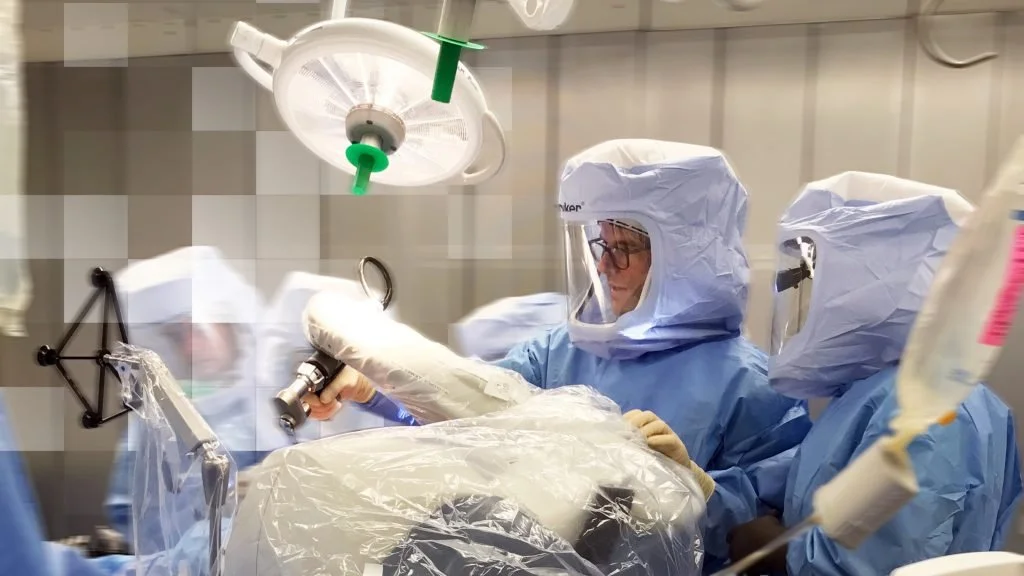
Enabling technology — either robotics or computer-assisted navigation — is used during knee replacement surgery to guide implant positioning with real-time 3D data. Dr. McLawhorn uses tools that verify alignment, soft tissue balance, and component placement throughout the procedure — improving accuracy beyond what is achievable by hand alone. Research from HSS suggests computer-assisted knee replacement may reduce the need for manipulation under anesthesia for post-operative stiffness. Most patients who are candidates for knee replacement are candidates for surgery with these technologies, and insurance typically covers it as part of the procedure.