
NYC & Stamford, CT

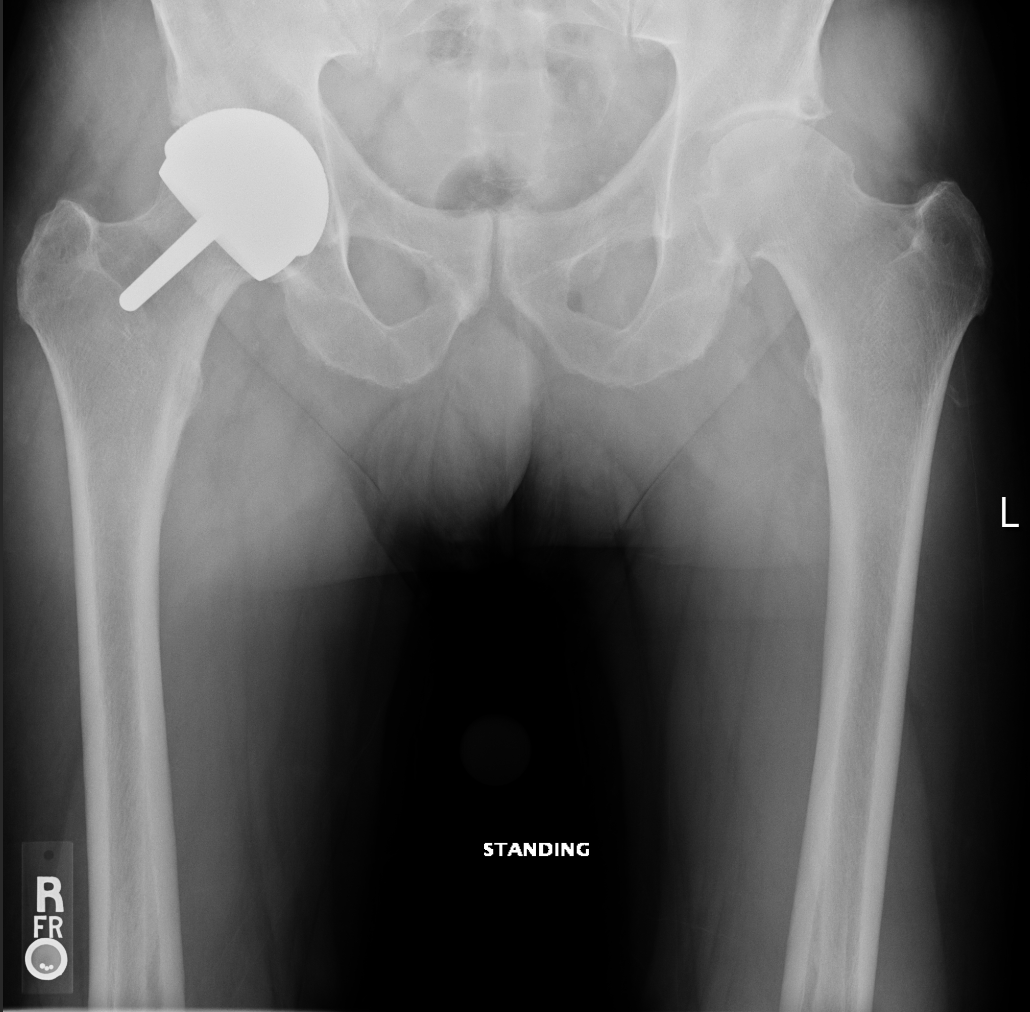
Hip Resurfacing Surgery
Hip resurfacing is a bone-preserving alternative to total hip replacement for carefully selected patients with hip arthritis. Instead of removing the entire femoral head, the surgeon reshapes it and covers it with a smooth metal cap. The damaged hip socket is replaced with a metal shell. Because more of the patient's natural bone is preserved, hip resurfacing maintains the normal size and shape of the hip joint while providing durable pain relief and improved mobility.
Unlike a traditional total hip replacement, which removes the femoral head and replaces it with a stemmed implant, hip resurfacing preserves most of the patient's natural bone. The femoral head is reshaped and covered with a smooth metal cap, while the damaged socket is replaced with a metal shell. By preserving the femoral head and neck, hip resurfacing maintains more normal hip anatomy and bone stock, making it an attractive option for select younger and more active patients.
How It Differs From Total Hip Replacement
Who is a candidate?
Men younger than 65 years of age
Patients with end-stage hip osteoarthritis and severe symptoms
Individuals with good bone quality and larger femoral head size
Active patients who participate in demanding recreational activities (running, skiing, tennis, impact sports)
Patients seeking a bone-preserving alternative to total hip replacement
Patients without significant hip deformity or bone loss
Patients with good kidney function
Potential Benefits
Preserves more natural bone — advantageous if future revision is needed
Lower dislocation risk compared to standard total hip replacement
More natural hip mechanics and range of motion
May be better suited to high-demand, active patients
Recovery
Recovery from hip resurfacing is similar to total hip replacement. Most patients walk the same day and return to low-impact activities within 6 weeks. Return to high-impact sport is typically possible at 6 months.